
Comfort
Rooms that are heated properly.
Drafts dropped, cold spots warmed up, and bedrooms that finally hold the same temperature as the rest of the house.
Serving South Coast, Cape Cod & Islands | M-F: 9 to 4 | (781) 831-1234
Mass Save Weatherization
Drafty rooms, high heating bills, a Mass Save report you can’t make sense of. We help you connect the dots and get the insulation and air sealing work that actually moves the needle.
Good Fit When
Why this matters
Most homeowners don’t actually want insulation. They want rooms that feel right, bills that make sense, and a Mass Save report they can read. That’s what we work toward.
Comfort
Drafts dropped, cold spots warmed up, and bedrooms that finally hold the same temperature as the rest of the house.
Efficiency
Air sealing and proper insulation help your furnace and AC actually keep the air you paid to condition.
Clarity
We translate the report so you know what the recommendations mean, which ones are worth doing, and where the rebates apply.
Local Fit
After nearly two decades insulating homes across Eastern Mass, South Shore, South Coast, Cape Cod and the Islands, we know how your house is built.
How it works
You don’t need a complicated explanation. You need to know what your home needs, what savings might apply, and how the work moves forward.
We start with a Mass Save home energy assessment. It’s free, and it tells us what your home is actually losing.
We walk you through the findings in plain English. Which recommendations matter most for comfort and savings, and which ones aren’t worth the time.
We sort out what’s covered by Mass Save rebates, what’s no-cost, and what’s left for you to handle, before any work starts.
Our crew handles the install. Air sealing, blown-in and dense-pack insulation, and any supporting repairs, on the same schedule.
What we install
Most Mass Save jobs aren’t one product. Attics get one approach, walls get another, and a handful of stubborn spots need spray foam. Here’s how we usually mix it.
Attics
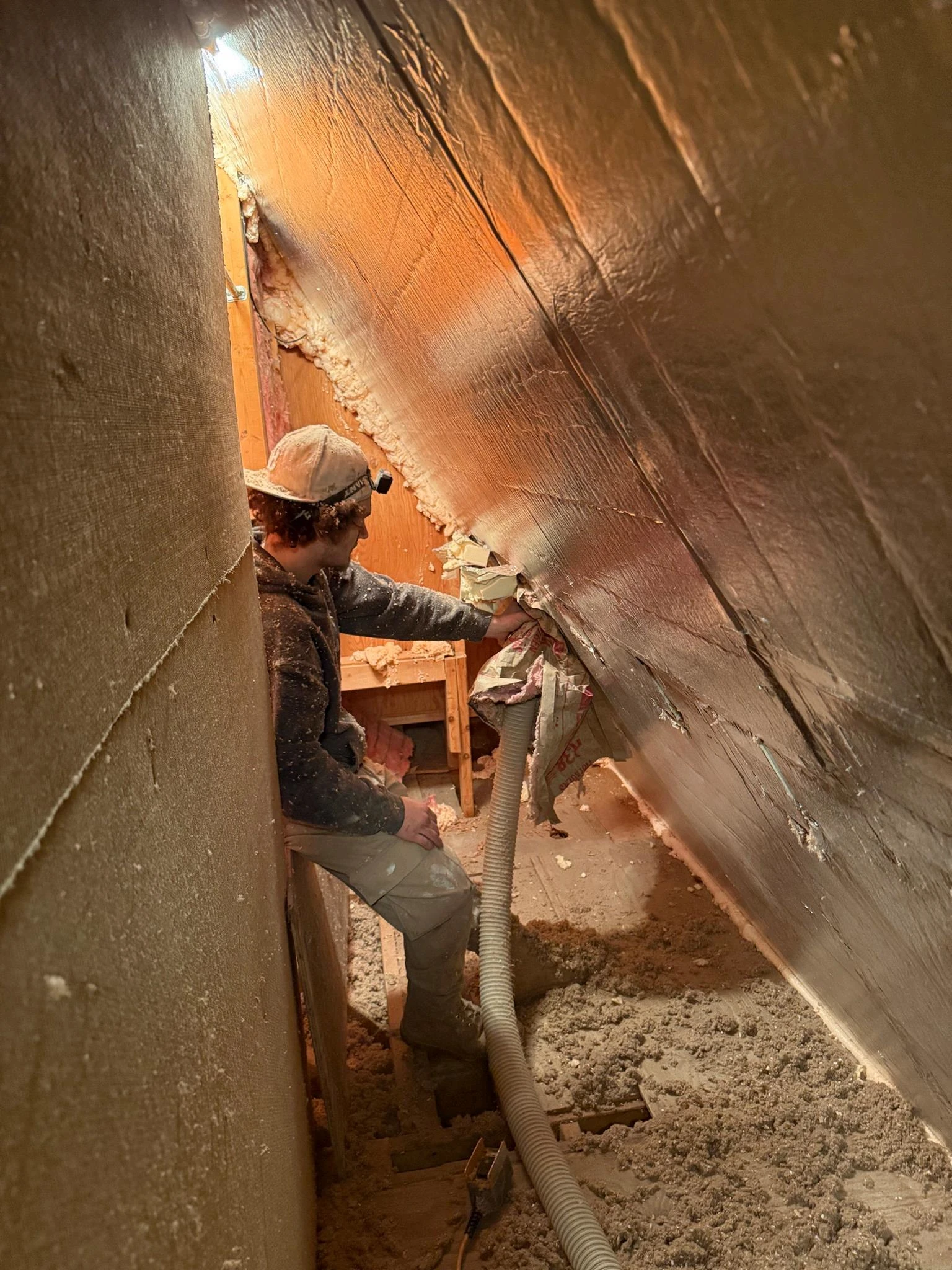
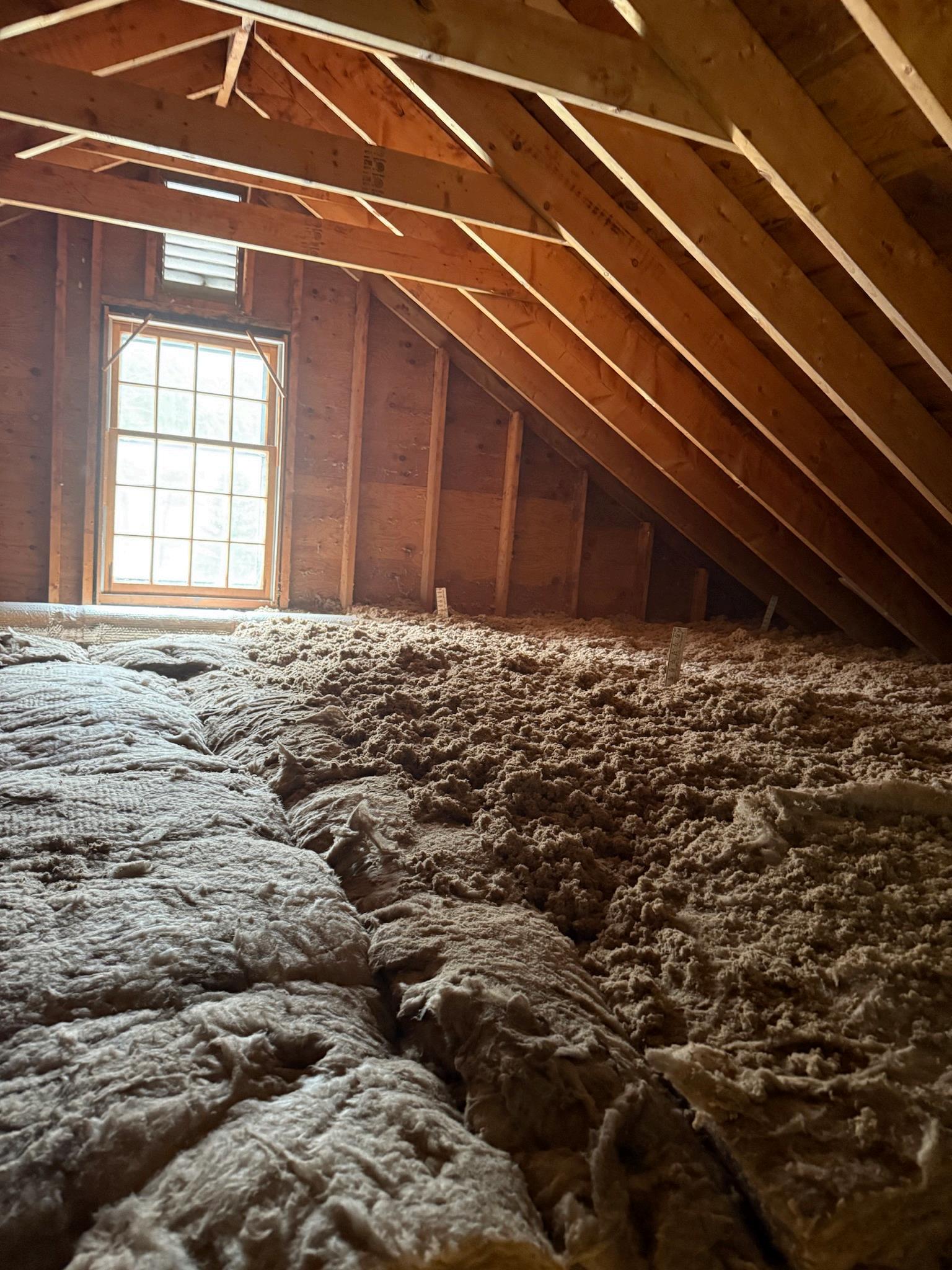
Blown-in cellulose laid across the attic floor, deep enough to hit the R-value the assessment calls for. We air seal the ceiling plane first, then blow it to depth so it covers joists, wiring, and ceiling penetrations evenly.
Walls
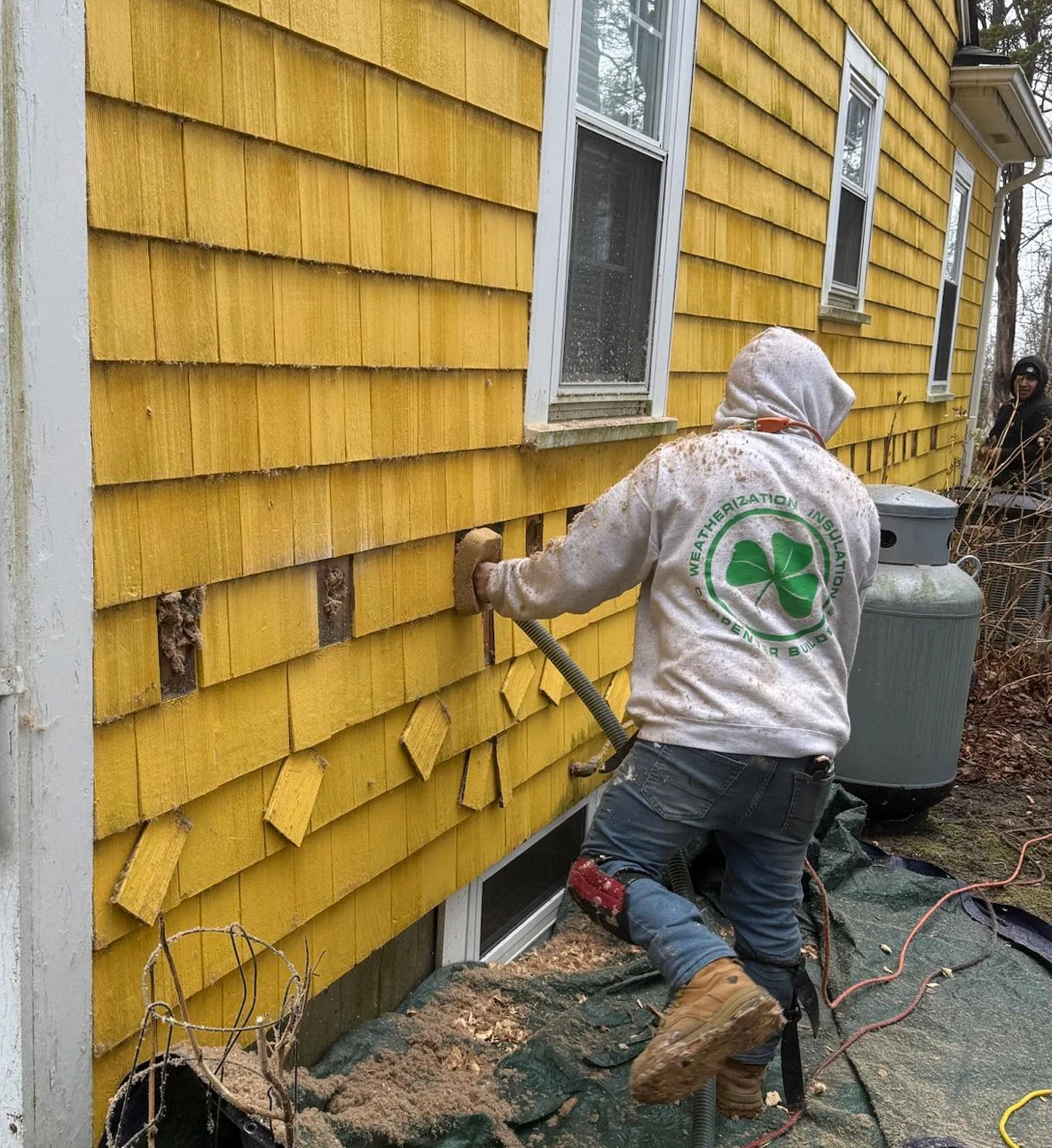
Dense-pack cellulose or fiberglass blown into existing wall cavities from the outside, through small holes drilled behind a course of shingles or siding. We plug the holes and replace the siding as we go, so the cavities stay full and warm air stops short-circuiting around the studs.
Basements & rim joists
Spray foam along the rim joist band where most of the cold air sneaks in, plus fiberglass batts between floor joists or in framed walls where the cavity is open and clean.
Tight or wet spots
Cathedral ceilings, kneewalls, crawl spaces, and other places blown insulation can’t hold a clean fit. That’s where spray foam earns its keep.
Mass Save Questions
Weatherization gets confusing when assessments, recommendations, rebates, and insulation options start running together. Here’s what we hear most often.
Usually yes. The free Mass Save assessment is what identifies the work that qualifies for rebates and no-cost programs. If you already have an assessment report, send it our way and we’ll walk through what it means.
For some homeowners, yes. Eligibility depends on your utility, your home, and what the assessment turns up. No-cost insulation is real, and we’ll tell you straight up whether you qualify.
Usually attic, wall, and basement insulation, air sealing around penetrations and rim joists, and any related repairs. The exact mix depends on what your home needs.
Blown-in cellulose for attics, dense-pack cellulose or fiberglass for walls, fiberglass batts where they fit, and spray foam in the spots that need it. The mix depends on what your home already has and what the Mass Save assessment calls for.
Start with the comfort problem you notice most. Drafts, cold rooms, uneven temperatures, high bills, or rooms that never feel right. We can usually connect those symptoms to a clear next step.
Your town, the main comfort issue, whether you’ve had a Mass Save assessment yet, and any notes or recommendations you’ve received. That’s plenty for us to start with.
We focus on Eastern Ma, South Shore, South Coast, Cape Cod & Islands. If you’re nearby and don’t see your town on the list, call or email. We probably cover it.
Mass Save HPC Contractor
Next step
The fastest path is a direct conversation. Tell us your town, the issue, and whether you have a Mass Save assessment yet. We’ll point you the right way.